Fukashi Castle — The First Fort (1504)
The site now occupied by Matsumoto Castle began as a modest fort called Fukashi Castle, built in 1504 by Shimadachi Sadanaga of the Ogasawara clan during the turbulent Eisho era of the Sengoku (Warring States) period. Japan at this time was fractured into competing domains, each controlled by a daimyo warlord, and fortifications were as much a statement of territorial authority as a practical military necessity.
The Ogasawara clan held Fukashi Castle through the early 16th century, though their grip on the region was never stable. When Takeda Shingen — one of the most powerful warlords of the period — swept through Shinano Province in 1548, the Ogasawara clan was driven out and Fukashi became a strategic base for Takeda operations further north.
Did you know? The Ogasawara clan's crest — a pattern of three diagonal bars — can still be seen carved into stonework at the castle site today, a remnant of the family that built the first fort five centuries ago.
The Ishikawa Construction — The Keep We See Today (1590–1594)
After the collapse of the Takeda clan in 1582, control of Shinano Province passed through several hands before Toyotomi Hideyoshi — the ruler who unified Japan — assigned the domain to Ishikawa Norimasa in 1590. It was Norimasa, and subsequently his son Yasunaga, who transformed Fukashi Castle into the monumental five-tiered, six-story keep that still stands today.
Construction of the main keep was completed around 1593–1594 — the same decade that Shakespeare was writing his earliest plays in London, a reminder of how genuinely ancient this structure is. Norimasa also renamed the fortress: Fukashi Castle became Matsumoto Castle, taking the name of the castle town that had grown up around it.
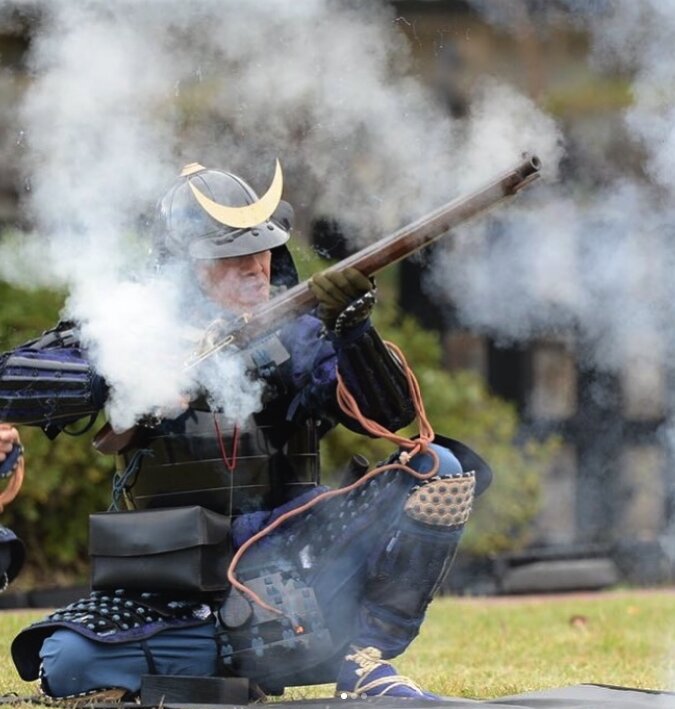
The keep was built during a period when firearms had recently arrived in Japan — introduced by the Portuguese in 1543, just half a century before construction began. The castle's architecture reflects this transition: it contains one of Japan's earliest gun platforms, with 65 specially designed openings for firearms alongside the traditional arrow loops of earlier castle design. The builders were hedging between two eras of warfare simultaneously.
The Warring States Period — Why the Castle Looks the Way It Does
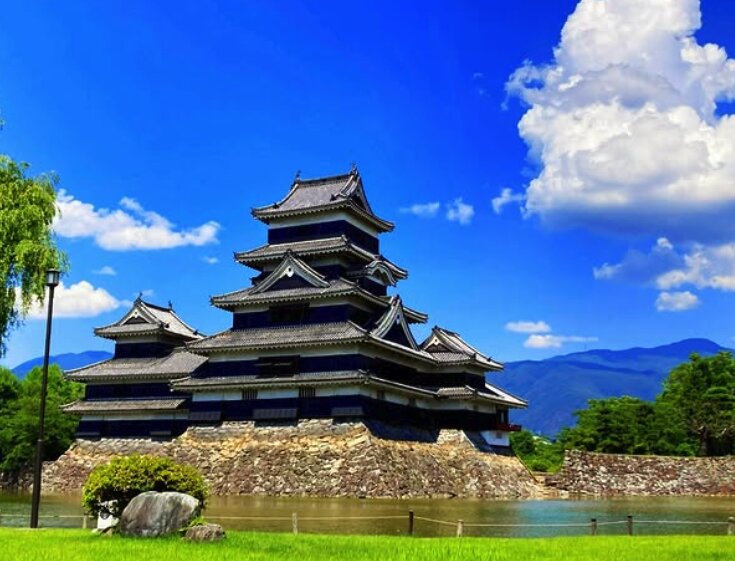
Matsumoto Castle is a hirajo — a flatland castle, built on the Matsumoto Plain rather than on a hilltop or mountain. This was an unusual choice for the period, when most castles exploited natural elevation for defence. The reason was practical: the Matsumoto basin offered no significant high ground, so the Ishikawa builders compensated with an elaborate double moat system that surrounded the castle on all sides.
The outer moat measured over 170 metres at its widest point. The inner moat was fed by underground springs, ensuring it could not be drained or diverted by an attacking force. Together, the two moats created a water barrier that functioned as the castle's primary defence — the equivalent of the cliff-faces that protected hilltop castles elsewhere in Japan.
The keep itself was designed for layered resistance. Each of the six floors reduced in floor area as it rose, creating the distinctive tapering profile visible today. The lowest floors housed weapons stores and garrison quarters; upper floors gave commanding views over the surrounding plain; the sixth floor served as the command position and offered a panoramic view that reached, on clear days, to the peaks of the Northern Alps.
Peace and PreservationThe Edo Period — Six Families, 260 Years of Peace (1603–1868)
After Tokugawa Ieyasu unified Japan and established the Edo Period in 1603, Matsumoto Castle's military purpose became largely symbolic. The domain passed through six different daimyo families over the next two and a half centuries — the Ishikawa, Ogasawara, Toda Matsudaira, Horita, and Mizuno clans among them — each adding their mark to the castle complex.
The most distinctive peacetime addition was the Tsukimi-yagura — the Moon-Viewing Turret — added by domain lord Matsudaira Naomasa in the 1630s. Unlike the black-lacquered war architecture of the main keep, the Moon-Viewing Turret is an elegant, open-sided structure with distinctive vermillion railings and a graceful roofline, designed for moonlit poetry gatherings rather than military operations. It remains the most visually striking contrast in the castle complex: a structure built for war, and attached to one built for contemplation.
The nickname Karasu-jo — Crow Castle — also dates from the Edo period. The castle's black exterior boards and white plaster walls, which gave it such a dramatic appearance against the sky, reminded observers of a crow spreading its wings. The name has endured for four centuries.
The Near-Demolition of 1872 — How the Castle Was Saved
The Meiji Restoration of 1868 brought sweeping modernisation to Japan, and with it a widespread policy of demolishing feudal castles as symbols of the old order. Dozens of castle keeps across Japan were torn down during this period. Matsumoto Castle was slated for the same fate.
In 1872, the castle was put up for auction. For a fraction of its worth, it was sold — apparently with the intention of clearing the site for development. The people of Matsumoto, however, refused to accept the loss. Local businessman and teacher Ichikawa Ryozo led a public campaign to buy the castle back and fund its restoration. He succeeded, and the castle was preserved through the collective effort of the townspeople rather than through government protection.
This remains a source of civic pride in Matsumoto today. Unlike many National Treasure castles that survived because of aristocratic patronage or official decree, Matsumoto Castle survived because ordinary residents of a castle town decided it was worth saving.
Did you know? Ichikawa Ryozo's campaign in 1872 pre-dated Japan's first modern heritage protection laws by over two decades. The castle was saved by community action alone, with no legal framework requiring its preservation.
National Treasure Designation and the Modern Era
Matsumoto Castle was designated an Important Cultural Property in 1930, and elevated to the highest level of protection — National Treasure — in 1952. It is one of only five castles in Japan to hold this designation, alongside Himeji, Inuyama, Hikone, and Marugame. Of these, Matsumoto's keep is the oldest surviving original structure.
Restoration work was carried out between 1950 and 1955, stabilising the foundations and repairing sections of the keep that had settled unevenly over the centuries. A second major restoration followed in the 1990s. The castle's architecture today reflects these careful interventions — original where possible, restored where necessary, and consistently maintained to the standard required of Japan's most protected historic buildings.
In 2026, seismic reinforcement work is underway. Sections of flooring have been removed for structural survey, and preparatory drilling is visible along the designated tour route. The castle remains fully open. For visitors on a Matsumoto Castle guided tour, the conservation work adds an additional dimension to the visit — a rare live view of how Japan maintains its most important heritage sites.
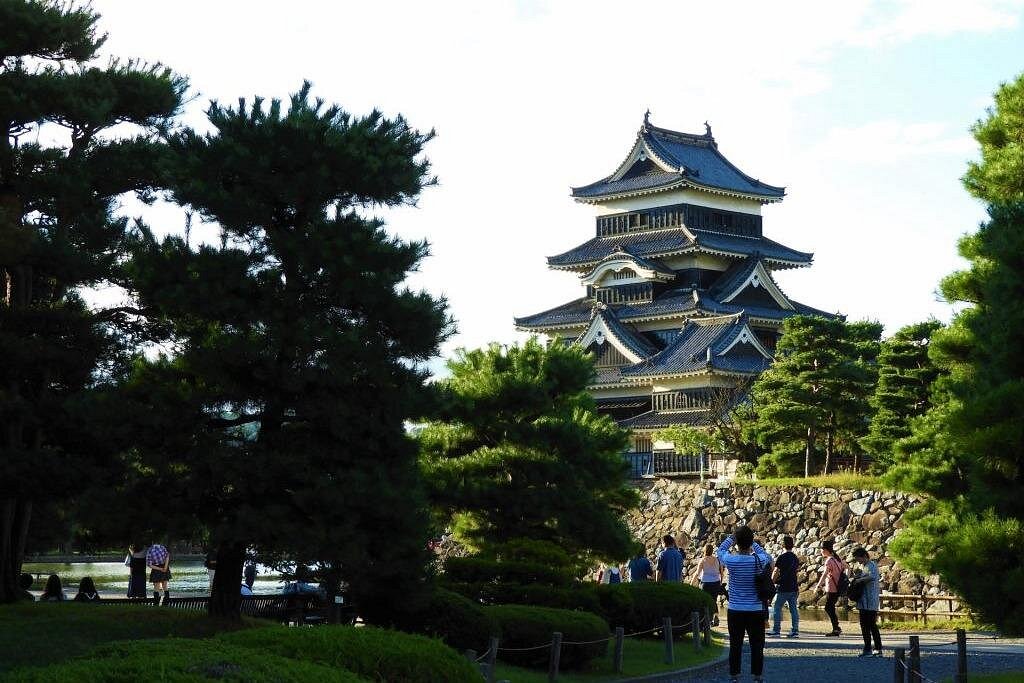
To understand the castle's physical structure — the connected towers, the defensive moat system, and the interior layout — visit the Architecture & Layout page. To book an expert-guided visit, browse Matsumoto Castle tours and tickets.